Saturday, 11 January 2020

Fire Hair

The warm weather at the start of the New Year gave me the chance to get out on my local patch and burn off some of the excesses of Christmas. I headed for Santa Maria de Trassierra, a small village in the Sierra Morena, about 15km from Cordoba. It is the birthplace of Beatriz Enrique de Arana, the lover of Christopher Columbus and it is thought that he stayed in the village. Today it is popular with Cordobans who have holiday homes here and as the starting point of a number of walks. 

I set off from the village towards Fuente del Elefante. This is an area I have walked many times before and despite the presence of walkers and cyclists, there is always an abundance of wildlife. Along the way I stopped to watch Blue Tits, Great Tits and Sardinian Warblers with their distinctive red eye ring. I also saw numerous Nuthatches and a Short-toed Treecreeper climbing up tree trunks in search of insects.

Sardinian Warbler

Fuente del Elefante is a large fountain in the shape of an elephant, which may date from Roman times and is part of the Valdepuentes Aqueduct, built to supply Cordoba with water. In Arab times it also brought water to the nearby Medina Azahara. The remains of the aqueduct can still be seen here, however the original elephant fountain is now housed in a museum in Cordoba and has been replaced by a replica. 

I stopped for a while near the fountain and watched Hawfinches, Chaffinches and Greenfinches in the treetops. Seeing these species together put the Hawfinch's size into perspective. Looking like a bird that has spent too much time at the gym, it is about twice the size of a Greenfinch. In Spanish it is called Picogordo which translates as big beak. This is an apt name for a birds whose bill, with a crushing force of over fifty kilograms, is able to break open acorns. Lower down in the canopy a Crested Tit hopped between the branches before being frightened off by the arrival of a Jay. In the ruins of a nearby building a Black Redstart darted between the ground and its lookout point on a wall and White Wagtails scurried across the fields. A loud 'krack krack' call marked the arrival of a pair of Ravens. 

After a while the tranquility was broken by the arrival of a group of walkers and so I headed back the way I came, taking the path towards Aroyo del Beyarano. Robins, Chaffinches, Nuthatches, Great Spotted Woodpeckers and Azure-Winged Magpies were common along this part of the track which passes through more oak forest. Then the high pitched song of Firecrest caught my attention. It was moving restlessly among the branches, but close enough to give me the chance to observe its bright green mantle and orange crest. In the sunlight its crest looked almost as if it had been sprayed on with luminous paint. In fact, the ignicapilla of its scientific name (Regulus ignicapilla) translates as “fire hair,” a reference to this blazing crown.I could also clearly see its white supercilium which its relative the Goldcrest doesn't have. However, like the Goldcrest this is a tiny bird, at just nine centimetres long and weighing just six grams. The fact that I was able to observe it for around ten minutes was the highlight of my afternoon. 

Firecrest

As I came out of the trees I could see Griffon Vultures circling as they looked for their next meal. There is a small population of about forty birds which nest nearby at Baños de Popea. The area is also home to other raptors such as Sparrowhawks and Goshawks, as well as Booted Eagles and Black Kites in the spring and summer.

Griffon Vultures

As I reached the stream (Aroyo del Beyarano) a movement on the ground caught my attention. At first I thought it was a small bird taking a mud bath, but on close inspection I realized that it was a bat which was flapping desperately in the mud. I believe they should be hibernating at this time of year so what it was doing here, I don't know. I rescued it from the mud and set it off the path to help it avoid the unwanted attention of passing dogs.


The path continues on to Baños de Popea but I decided to turn back as the afternoon drew to a close. The peacefulness of the oak forest and time spent oberving the woodland birds proved to be the perfect antidote to the New Year blues.

Saturday, 9 November 2019

Yellow-browed Warbler


This week saw a rare visitor turn up on the banks of the Guadalquivir in Cordoba. A Yellow-browed Warbler was seen in the poplar trees at Molino de Martos. It was very active, hopping from branch to branch in search of insects and occasionally being chased off by a Black Redstart. It had greenish upperparts and a distinct long pale yellow supercilium.

Yellow-browed Warbler

This leaf warbler’s breeding range extends from just west of the Ural Mountains to eastern Siberia and Mongolia. Although they normally winter in southern Asia, they are sometimes found in northern Europe in October and November. And since 2014 they have started coming to Spain in regular numbers with between 4 and 38 individuals seen each year. At first these sightings were thought to be migrants who had got lost or been blown of course but it now seems that they may in fact be part of a pioneering group which are dispersing into new areas. In fact there does appear to be a small population wintering in the Canary Islands. So it seems that this is a bird we are likely to see with increasing frequency in the years to come.

Thursday, 29 August 2019

The Flatlands

Weeks of never-ending heat in Cordoba meant I, like the birds, was in search of water. The obvious choice might have been to head for the coast but I decided to visit a wetland area in the La Mancha plain, the land of windmills in Don Quixote, called Tablas de Daimiel. The area was declared a National Park in 1973 and is one of the smallest, with an area of 1928 hectares. In 1988 it was made a Special Protection Area for Birds (ZEPA). Tablas de Daimiel is the last remaining example of floodland wetlands which were once common in central Spain. The wetlands are fed with two types of water making an unusual ecosystem: the Guadiana contributes fresh water, while its tributary the Gigüela is brackish. Underground streams also used to surface in springs known as Ojos (eyes). The area is an important stopping point to a great number of migratory birds as well as a wide range of resident species. 

My friend Ron and I left Cordoba early and stopped mid-morning at a roadside bar in the Sierra de Despeñaperos, which is located at the eastern edge of the Sierra Morena. The decision to lift the binoculars out the car proved to be a good one, as before we had even sat down for our coffee we had spotted a Spanish Imperial Eagle soaring around the mountain tops. We were also able to observe it through the telescope when it landed on a electricity pylon. It was soon followed by another and four or five Griffon Vultures. Not a bad way to start the trip!

By lunch time we had arrived at Tablas de Daimiel and wasted no time in setting off round the park. Stopping at the first pond we watched Reed Warblers darting between the reeds. A little further along we had a Great Tit, Zitting Cisticolas, Reed Buntings, Stonechats and Moorhens. Every so often a Marsh Harrier would glide over the reeds search for its prey and bee-eaters would pass overhead calling loudly.

Zitting Cisticola

There were not many birds to be seen and worryingly much of the park was dry. Boardwalks over the marshes now passed over dry land. While August is one of the driest times of the year, it was hard not to wonder if the lack of water is a result of intensive agriculture in the surrounding area which has drained the water table and natural springs.

European Pond Turtle

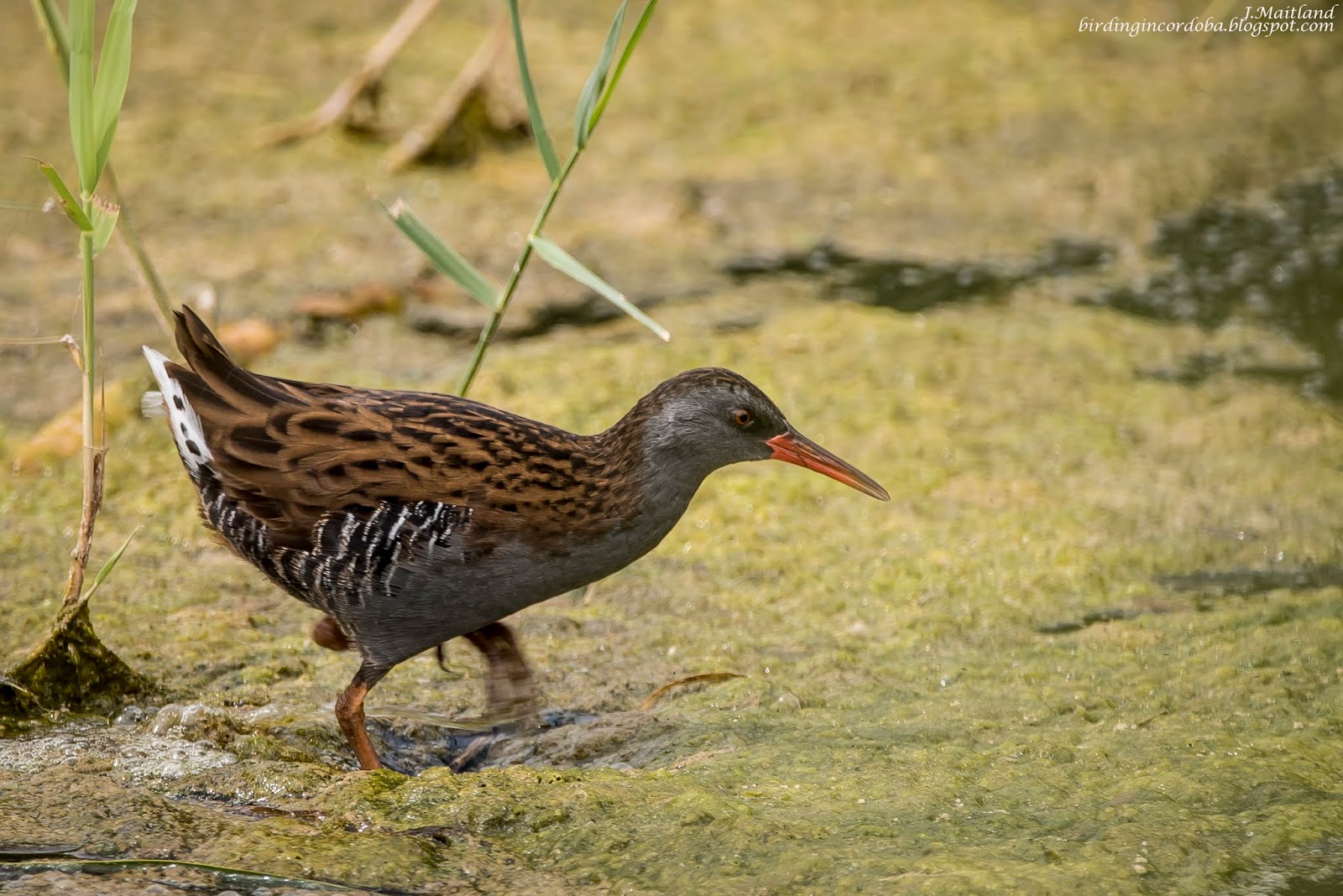
Our luck seemed to change as we neared the end of the track. First we caught sight of a Bearded Reedling flying over the reeds. This was one of the birds we had come to see so it was great to catch sight of it even if it was only fleeting. Next we watched a Penduline Tit in a tree beside the path and a few Kingfishers zipped past. Sand Martins were swooping over the reeds and a Little Bittern hurried into the cover of the reeds as we approached. Then we heard a strange pig-like squeal coming from the reed bed. Ron told me that this was a Water Rail and after waiting for a while we were rewarded with the sight of one darting across the water. It certainly produced a strange noise for such a small bird. 

Water Rail

Rehydrating at a nearby bar we saw a flash of yellow as a Golden Oriole flew past and landed in a tree.

Golden Oriole

After our break we decided to look for sandgrouse. With no real idea of where to go we followed a track across the countryside in an area called Campo de Calatrava. It takes its name from the Order of Calatrava, a military order which held territory in the area from the time when it was on the border between Christian and Muslim Spain. We passed fields of watermelons, onions and others with grapes or olives. But what were looking for were bare muddy fields which we suspected would be more attractive to the sandgrouse. We drove for some time, our eyes starting to ache from scanning endless fields, without luck. After an hour all we had seen for our efforts was a Stone Curlew, Hoopoes, a few Crested Larks and some Magpies. Just before we reached the end of the road, Ron's bird-dar activated and he drove us up a side track. At first we saw a Griffon Vulture being mobbed by a smaller raptor and then we shouted out in unison as we saw what we were looking for - sandgrouse sitting together on the ground in the far end of a field. We had come across a group of about 30 birds and were able to observe them through the telescope despite the heat haze. They were Pin-Tailed Sandgrouse, a beautiful bird with its striking rufous breast. These birds were a lifer for me and a great way to end the day. 

Pin-Tailed Sandgrouse

On our second day we went to Laguna de Navaseca, a lagoon which never dries up due to the constant supply of water from a treatment plant. It is a great site with numerous hides offering different views of the lagoon. From the first hide we could see Flamingos, Greylag Geese, Black-Winged Stilts, Little Egrets, Little Grebes and Black-Necked Grebes. There was a large group of White-Headed Ducks in the middle of the lagoon. There are reported to be over 150 individuals here, which is a sign of the remarkable turnaround for the species since the late seventies when there were only 22 left in Spain and all of them in Laguna de Zonar in Cordoba. 

Juvenile White-Headed Duck


A little further along we had good views of some of the waders such as Little-Ringed Plover, Kentish Plover, Wood Sandpipers, a Green Sandpiper, Common Sandpipers, Curlew Sandpiper and a couple of Little Stints. Glossy Ibis arrived and there were also large numbers of Lapwings, Moorhens and Coots. 

Glossy Ibis

The second hide allowed us to get close to the water's edge. We watched a couple of Water Rails and a Purple Swamphen feeding along the edge of the reeds. Ducks were also present, with Teal, Gadwall and Red-Crested Pochard added to the list. A pair of Snipe briefly flew in and we watched a Bluethroat and Bearded Reedling come down for a drink. A Marsh Harrier would occasionally fly over the reed bed causing panic amongst the other birds. In the trees behind us we saw a Golden Oriole, Cetti's Warblers, Willow Warblers, Woodchat Shrike, Linnets, Goldfinches and Ron spotted an Olivious Warbler. 

Goldfinch


Our last stop around the lagoon saw us add Ruff, Redshank, Black-tailed Godwits, Little Bitterns, Squacco Heron and Great-Crested Grebes to our day list. We also observed Pin-Tailed Sandgrouse flying in to drink.

Great-Crested Grebe

After lunch it was time to leave the flatlands behind us and head back to Cordoba. With over 80 species and all but one of our target species found (Black-Bellied Sandgrouse remained elusive) the trip was a resounding success. It would however be interesting to return in early spring to see the area when the water levels are higher and the birds are calling more. 


Sunday, 25 August 2019

The Guadalquivir

The Guadalquivir, which stretches 650 kilometres from its source in Sierra de Cazorla to the Atlantic Ocean in Doñana,  is sometimes described as the backbone of Andalucia. Such was its importance in Roman times, the whole region was called Baetica after the Roman name for it. Today, it plays a vital role in irrigating cropland and its waters support a wide range of fauna. However, accessing the river outside the city of Cordoba can sometimes be difficult. One of the best places to do so is at El Salto reservoir near the town of Pedro Abad, which lies 35 kilometers east of Cordoba. At the hydroelectric dam the water flows slowly and the river is wide and meandering. 

The dam itself is a good place to stop and scan for activity in the reeds and along the banks. Little Egrets, Grey Herons, Moorhens, Coots and Common Waxbills are often seen feeding here and if you are lucky you might catch a glimpse of an otter. South of the dam Common Sandpipers, Cormorants and Grey Wagtails can be observed on the boulders and rocks. It is also a good place to check the skies for raptors. I have seen Marsh Harriers, Buzzards and Black Kites here. 

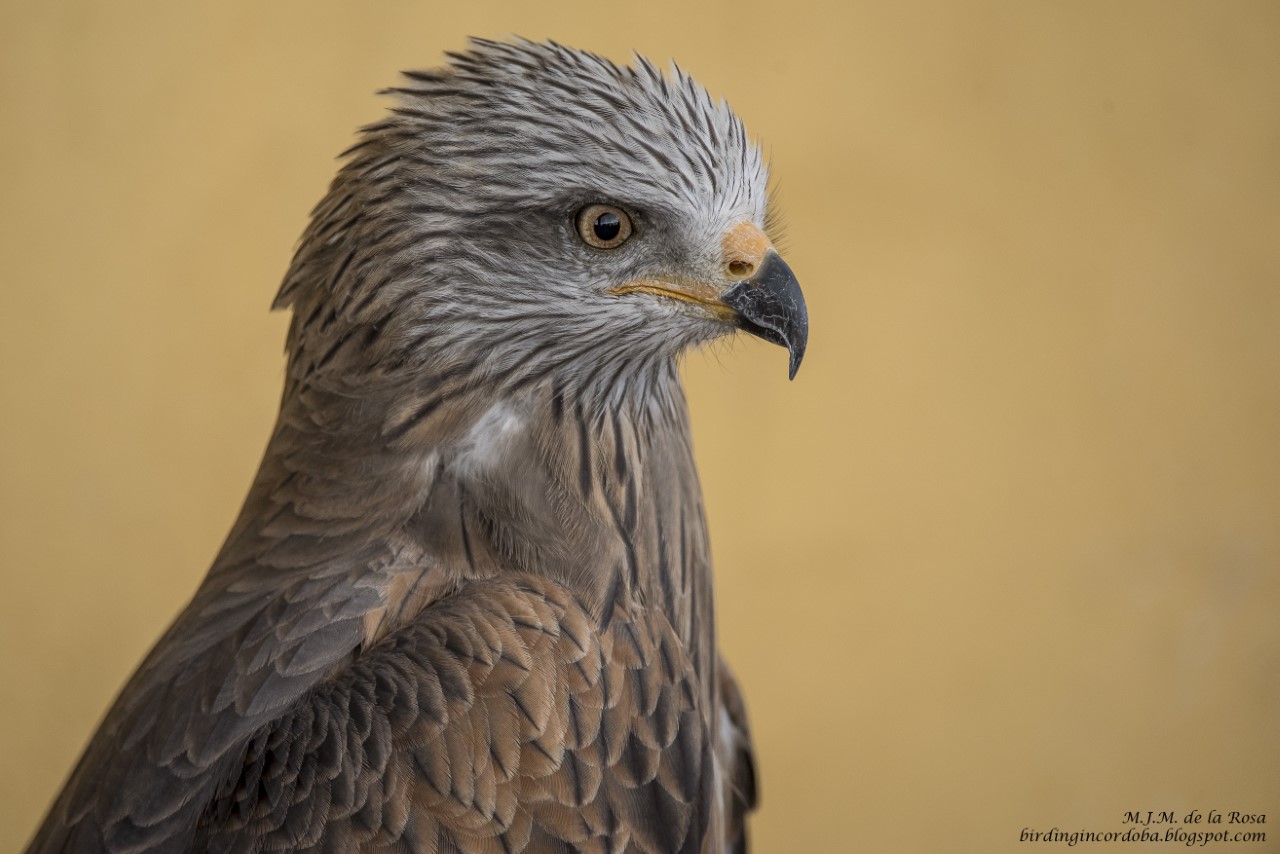
Black Kite

Following the road in the direction of Adamuz you can stop to enjoy the views of the river and look along the swathes of reedbeds. I have seen Purple Swamphens hiding in the canes, Kingfishers darting from their perches to catch fish and groups of Cranes passing overhead. 

Purple Swamphen

A little further along the road you come to Arroyo Tamujoso. Often this stream is all but dried up, however it is worth stopping here to explore the area on both sides of the bridge. On the northern side I watched Kingfishers fishing in the stream and Robins, Blackcaps, Long-tailed Tits in the white poplars. On one visit I was lucky enough to get a view of a Firecrest as it hopped between branches in search of insects. A Tawny Owl was also heard calling from the trees where I parked the car but unfortunately I wasn't able to see it.

Robin

There is also a large rock outcrop called Peñón del Jituero which is a popular spot for climbers. Black Redstarts have nested in holes in the rock and on one occasion I saw a Great Spotted Woodpecker raiding a nest and causing quite a commotion. 

Black Redstart


Crossing the bridge, there is a small area which can be explored on foot. Song Thrushes and Redwings can be found here in winter and I have also spotted Hawfinches, Chaffinches, Hoopoes as well as large groups of Azure-Winged Magpies. 

The whole area is also one of the best places near Cordoba to see Bonelli's Eagles which must be nesting nearby, as I have seen them on almost every visit. These large raptors are one of the most agile and are also extremely aggressive even towards other large birds of prey. 

Bonelli's Eagle

This is certainly a place which has a good range of resident birds and it is reported to be home to Eagle Owls and the elusive Water Rail, although I haven't seen them here. You are also likely to encounter passage drop-ins, such as Osprey and Spoonbills, meaning you never know what you might find. 


Sierra de Hornachuelos

Fifty kilometres west of Cordoba lies Hornacuelos National Park in the Sierra Morena. The vast unpopulated area of scrubland, Mediterranean woodland and Holm Oak woods make it a great location for seeing some of the region's more secretive fauna.

It is a large area to explore but a good starting point is the visitor centre just outside the village of Hornacuelos. There are various walks which can be done from here, some of which require permission, but the simplest is La Rabilarga trail. Despite only being about 2km long it offers the chance to see a wide range of species and follows La Rabilarga stream. In February we saw a Lesser Spotted Woodpecker, the star attraction, just metres from the visitor centre. We also saw many members of the tit family, including Blue Tits, Great Tits, Crested Tits and Long-tailed Tits.

Long-tailed Tit

The thickets along the river are also home to Blackcaps, Sardinian Warblers, Robins, Nightingales, Cetti's Warbler, Serins, Hawfinches, Goldfinches and Chaffinches. A recent trip in August also revealed that this area is popular with Golden Orioles. 

Female Blackcap

In the Cork Oaks see saw Short-Toed Treecreepers, Nuthaches, Bonelli's Warblers, Spotless Starlings, Hoopoes and Azure-Winged Magpies, which the stream is named after.  

Other areas of the park can be explored by car. While there are not many places to pull in off the road the lack of traffic makes it relatively easy to stop. The A-3151 from the village of Hornacuelos to San Calixto and beyond is a drive which offers spectacular views of the wild landscape and the chance to see some of the more secretive birds that live here as well as Red Deer, Wild Boar and butterflies. 

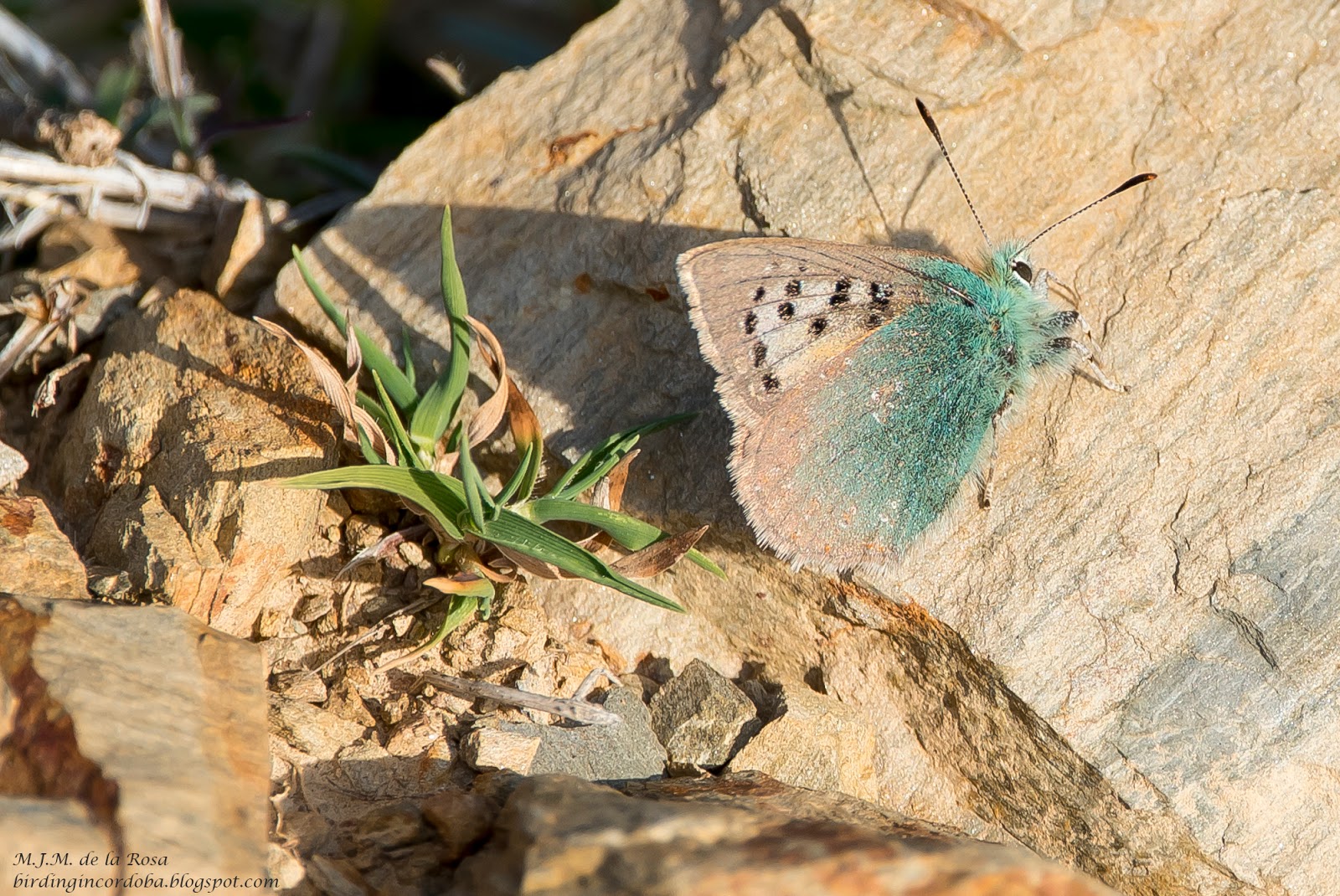
Cardenillo (Tomares ballus)

We have seen Griffon and Black Vultures soaring overhead as well as Red Kites, Booted Eagles, Buzzards and Black Storks. There is also a local population of Spanish Imperial Eagles. 

Spanish Imperial Eagle

The remoteness of the park makes it a great place for star watching and there are now regular activities throughout the year to promote this. 

The Milky Way


The area is also one of the key beekeeping regions in Andalucia and the fantastic honey can be bought in a small shop in the village. 

Bee feeding on the nectar


Saturday, 24 August 2019

Far and Wide


Last November I set myself a target of 200 species in Spain by the end of this summer. I realised that to achieve my goal I would need to travel a little further afield and my first destination was Sierra Magina in Jaen province. It was a bitterly cold day with frost on the ground at the higher altitudes and few birds showing. We were lucky enough to catch sight of three Golden Eagles soaring above the mountain peaks and a Ring Ozul (a lifer) feeding on berries. The only other excitement for the day were a few Crossbills that sat obligingly on top of the pines. 

The next few trips were to the north of Cordoba. In Sierra de Andujar we a saw a couple of Lynx as well as great views of a Spanish Imperial Eagle. In the ZEPA Alto Guadiato we watched Cranes coming into to their nighttime roosting sites, their loud trumping calls alerting us to the presence before we could even see them. They spend the day feeding on acorns and other seeds before gathering to fly to their roost sites. We watched them landing on a small island in the reservoir which offered them protection from terrestrial animals such as foxes. They winter here and their arrival is also one of the highlights of the colder months. Oddly, there was the belief in Doñana that eating crane meat which had been cooked on a grill with seven different types of wood would result in a long life. I am glad that this belief no longer exists!  


Cranes

In the same area we observed a group of Great Bustards in a distant field. And nearby, at the Castillo de Santa Eufemia we had superb views of a Black Vulture, a Golden Eagle, Griffon Vultures, Kestrels and Black Wheatears.

View from the castle at Santa Eufemia


Winter soon turned to spring and I was still about 20 birds short of my target. A trip to Cadiz for work gave me the perfect excuse to go to Vejer de la Fronter in search of one of the world's most threatened birds - the Bald Ibis. Listed as Critically Endangered on the ICUN Red List, this population of 80 or so birds is as a result of a reintroduction programme. A newly constructed viewing platform allowed us to observe these comical-looking birds at close quarters as they collected material to repair their nests.

Bald Ibis

In May I travelled to Brazo del Este near Seville, which is fast becoming one of my favourite birding sites because of the sheer number of birds it is home to. With much help from my friend Ron, we got 58 species in one day including Montagu's Harriers, Black Kites, Little Bitterns, a Squacco Heron, Purple Herons, Spoonbills, Flamingos, Glossy Ibis, Avocets, Curlew Sandpipers, Wood Sandpipers, Redshanks, a Stone Curlew, Collared Pratincole, Gull-billed Terns, Whiskered Terns, Great Reed, Warblers, Black- Headed Weavers, and a Roller.

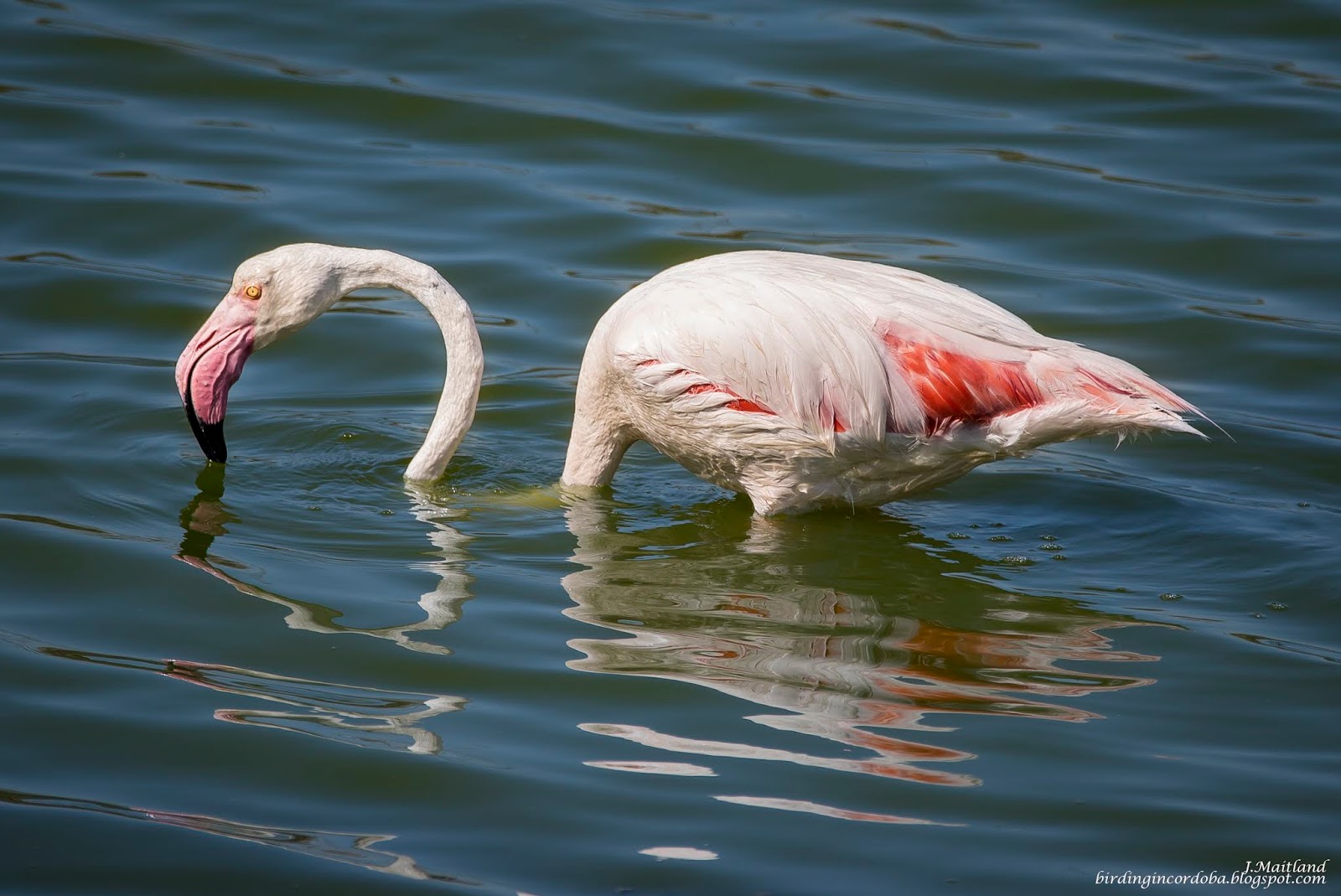
Flamingo

The star of the day was a Savi's Warbler which was calling loudly from the top of a reed. Its distinctive song made distinguishing it from other members of the warbler family quite easy, once Ron told me what to listen for. The days birding gave me four new species for my list and brought me ever closer to my target.

Great Reed Warbler

We also found this large nest which I presume is home to either the Yellow-Crowned Bishop or the Black Headed Weaver.


In July I heard of a real rarity, a Red-footed Booby, which had been sighted in Caleta de Velez, Malaga. Ron and I set off in search of it but were disappointed to see that it was not on what we had been told was its favourite floodlight nor in the surrounding area. The local population of Monk Parakeets, with their bright green plumage, provided a brief distraction as they squawked loudly from the palm trees around the harbour area. Not a native species to Spain, SEO estimates that there are at least 20,000 of them across the country. They were brought here as pets and escaped or released birds have quickly formed a 'healthy' population in many Spanish cities. This rapid growth has led to calls for them to be eradicated because of the damage they cause to native flora and fauna. 

Monk Parakeet

We continued our wait  and watched a Cory's Shearwater skillfully gliding over the waves off the coast and Audouin's Gulls on the beach.

Audouin's Gull

After an hour or so we concluded that the Booby had probably gone out to sea to feed and so we drove on to La Charca Suarez in Granada province. This is a site I had read a lot about but had never had the chance to visit. It is a haven for wildlife surrounded by apartment complexes and industrial estates. The infrastructure for birders is great with many hides overlooking the lakes around the park. And despite only having an hour to look around before they closed the gates, it did not disappoint. We had close views of a Squacco Heron, Purple Swamphens, Red Crested Pochards, Little Grebes and Red Knobbed Coots, which were another first for me. These are one of the most endangered birds in Spain and were released here in the 90's as part of a reintroduction programme. The look very much like a coot except for two red nodules on their heads which they have during breeding season.

Red Knobbed Coot

After stopping for a drink we decided to call in again at Caleta de Velez on our way home. It proved to be a good decision as we immediately located our target bird, the Red-footed Booby. It was busy preening and seemed quite unaware of the gulls which were put out at losing one of their perches to this strange foreigner. I say this as it is usually found around 9,000 kilometers away in the Caribbean. This juvenile, with its brown plumage, blue eye contour and red legs, had caused quite a stir in the birding world. It is what the Spanish call a 'megarareza' and had even had an article devoted to it in El Pais. We watched it for about half an hour, hoping it would take off to allow us to see it in flight but it didn't oblige. It was another one for my Spain list (even if it isn't in my Collins) and meant that I was on 199. Just one more to go!

Red Foot Booby

After travelling far and wide across Andalucia to find some rarities, number 200 came closer to home in the Sierra Morena. Again with the help of my friend Ron we saw a pair of Western Bonelli's Warblers. They were quite hard to get in the binoculars because they were constantly moving as they hopped between branches looking for small insects and occasionally picking one up from the ground before darting back to the cover of the leaves. Of a similar size to a Willow Warbler, what really made them stand out was their silky white underparts. 

There are of course many more birds which I have yet to see in Spain, some quite common, and with the variety of habitats that Andalucia has to offer I am sure it won't be too long before I can add them to my list. 


Wednesday, 7 November 2018

Aiming for the Sky

After talking to fellow birders about their list of species seen in Spain, I decided to count mine. I had 169 which, while modest, pleased me as it had been achieved in about 18 months. And with the 200 mark relatively close I decided to aim for the sky and set myself the challenge of reaching it by next summer (a deliberately vague deadline). However, I soon realized that this was going to be tougher than I thought with many of the species seen around Cordoba already ticked off. 

Black Stork, White Stork, Little Egret and Grey Heron hanging out together next to the rice fields

With this in mind I decided to team up with a friend and explore new territory. Brazo del Este is a labyrinth of rice fields, fed by a branch off the Guadalquivir, to the south of Seville. My guidebook spoke highly of the site, but we were worried that autumn might not be the best time to visit. Taking the SE-9020 we headed in the direct of the village of Pinzón. The translation of this village is 'finch' which seemed like the perfect place to start a day's birdwatching! 


Almost immediately our attention was drawn to huge flocks of birds flying above the fields to the right of the road. They looked to have been recently ploughed and this had drawn in hundreds of White Storks and Glossy Ibis. Looking through the crowd of birds we could also see Little Egrets, Grey Herons and at least five Black Storks. 

Views from Los Chapatales

After Pinzón the road runs alongside a canal flanked by Eucalyptus trees. Here we came across flocks of Linnets as well as Stonechats, Black Redstarts, White Wagtails and a Kestrel. After while we reached a large rice silo and turned right. Here a Squacco Heron was fishing in the small canal and the reeds and bushes were full with House Sparrows, Common Waxbills and Yellow-Crowned Bishops. The last of these is an African species which has formed a thriving population here. Unfortunately, as it was outside the breeding season the males didn't have their bright yellow and black plumage. Instead they appeared very similar to the females which have pale brown upper-parts with dark streaking and an off-white supercilium. 

Squacco Heron

We drove along the road which offered elevated views over the rice fields and the possibility to stop whenever we liked due to the lack of other vehicles. Grey herons, White Storks and Little Egrets flew up as we drove past only to land 20 metres further down the road. The whole process was repeated time and time again as we edged our way along the track using the car as our hide. 

White Stork

After about a kilometer we arrived at a body of water on the left. We stopped here to scan the fringes of the reedbed. Not long after pulling up a Purple Swamphen appeared from the reeds before making a dash across the water and disappearing again. A Whinchat, on its migration south, sat on the barbed wire long enough for us to distinguish it from the many Stonechats. Spotless Starlings and Goldfinches were busy in the trees, a Chiffchaff hopped around hunting insects and a Zitting Cisticola darted from bush to bush. Before long more Purple Swamphens gave us better views and just as we were about to leave we heard a Water Rail calling. Despite waiting for another 20 minutes it didn't reveal itself.

Chiffchaff

A little further on Spoonbills were feeding alongside more Glossy Ibis, Black-winged Stilts and the occasional Common Sandpiper. We also saw a Great Crested Grebe and Little Grebes diving in the deeper water. On the other side of the road Black-headed Weavers were busy in the reeds. This is another African species whose presence here has been put down to escaped caged birds. They have been here since the mid-nineties and there are also populations in nearby Portugal. The non-breeding males are similar to the females with a white belly and a pale yellow breast. They also have a noticeable white iris. 

Black-headed Weaver

After a while the road turned into a dirt track so we explored some of the side tracks off the main road. This gave us more views of Squacco Herons, Spanish Sparrows, Waxbills and Black Storks. Marsh Harriers were a frequent sight swooping over the reeds and we also saw a few Red Kites.

Common Waxbill

On returning to the rice silo we decided to take a look at the area to the south. The rice plantations gave way to fields full of cotton plants and other areas which didn't have any crop. Here we observed Crested Larks and Sky Larks on the ground often accompanied by White Wagtails. We also caught a brief view of a Tawny Pipit, which is usually only seen here in the migration period. I didn't have time to get a good shot of it and despite our best efforts to find it again it remained elusive.

A herd of sheep passing us by

At the end of day I had added a whopping six new species to my Spain list (all lifers). Brazo del Este certainly lived up to my expectations and is definitely an area I will return to as soon as I get the chance. It is impressive not only in the quantity but also the quality of the birds it has to offer. What is more, it gives you really good opportunities to observe at close hand species which are often secretive, such as Black Storks or Purple Swamphens. Only 25 more species to go!


Autumn Getaway

In early December I had the chance to visit an area than has been on my to-do list for a while - Sierra Madrona. This mountain range is part...