Thursday, 9 April 2020

The Furze Wren

There are some birds which I remember clearly seeing for the very first time. When I was a child I recall being taken to see Hen Harriers displaying near their nesting site in Northern Ireland. Being so young, I was amazed at seeing such large birds of prey. Since moving to Spain I have seen many more new species and my first encounters with them often remain clear in my mind. In Huelva I saw my first Osprey sitting by the water's edge. This was a bird I had spent years looking for in Northern Ireland and to finally see it, even in the distance, provoked a feeling of great excitement. Another, is the first time I saw bee-eaters. Driving along a country road near Cordoba, my attention was caught by these amazingly colourful birds swooping in the air as they caught their prey. I immediately pulled the car over to the side of the road to watch them and listen to their distinctive call. I remember thinking how exotic they looked compared to the birds I was used to seeing back home. Now, like for many people in Spain, their arrival marks the beginning of spring and warmer weather. I remember these experiences so vividly because they were birds that I had being trying to see for a long time. However, there is one first sighting which I remember for different reasons. In fact, when I first saw this bird I didn't even know of its existence.  


I was at the Mirador (viewpoint) in Villafranca near Cordoba watching raptors during spring migration. During a lull in birds passing overhead, one of the Spanish birdwatchers pointed out a bird in the gorse. Each time I tried to get on it with my binoculars it would hide itself deep in the shrubs or dart to another patch of vegetation. Its distinctive rattling call was almost teasing me. However, my persistence paid off and after a while I got a good view of it perched on top of heather. It had a blueish grey head and back, and red wine coloured underparts. This was a color I had not seen on any other bird and the throat was spotted with white. Its red eye-ring was also clearly visible. The Spanish birdwatcher identified it as a Curruca Rabilarga. The direct translation would be a long-tailed warbler. However, searching for it in my field guide I found the name Dartford Warbler, quite different from the more apt Spanish name.  


Many birds are named after where they live such as House Sparrows, Marsh Harriers and Barn Owls. Others, like the Dartford Warbler are named after certain areas. We have the Mediterranean Gull, Canada Goose, and Iberian Magpie. But I soon learned that the name Dartford Warbler is a misnomer as they don’t in fact live there. The first official recording of the species was in 1773 by an ornithologist named John Latham who shot a pair of them on Bexley Heath. He then decided to name them after the nearby town of Dartford. Interestingly, he also discovered two other species (Kentish Plover and Sandwich Tern) whose names have the same origin- the county of Kent. Maybe an old folk name for the Dartford Warbler, the Furze Wren, is better suited- furze meaning gorse. Or we could use Long-tailed Warbler like the Spanish. However, its current name gives us an insight into the interesting story of how this species was first documented.  


Dartford Warber


Southern England marks the northern edge of their breeding range, which stretches south to north-west Africa. They are relatively localised in England and are vulnerable to harsh winters, nearly dying out completely in the winter of 1962-63. In Spain they are much more common, with 1.7-3 million breeding pairs. It is largely resident, although some local migration occurs with birds abandoning colder mountainous areas in winter. 

They are insectivores, feeding on caterpillars, butterflies, beetles and spiders. Here in southern Spain they lay their eggs around the beginning of April and can raise two or even three broods a year.  


While the species appears to be benefiting from warmer winters in northern Europe, there is evidence to suggest that numbers on the Iberian peninsula are falling. Habitat loss could be a cause of this and as a result the species is now listed as 'near threatened' by the International Union for Conservation of Nature (IUCN). 


They are a reasonably common sighting for me now around Cordoba, especially in the Sierra Morena and the Sierra Subbética. However, every time I see this warbler my mind is cast back to that first encounter.   


Sunday, 5 April 2020

Lockdown Birding

Like much of the world right now, Cordoba is in lockdown due to the COVID-19 outbreak. Since the 14th March my birdwatching has been restricted to the confines of my garden. I have enjoyed reading other people's accounts of their garden birdwatching so I have decided to share what I have been seeing over the last three weeks.

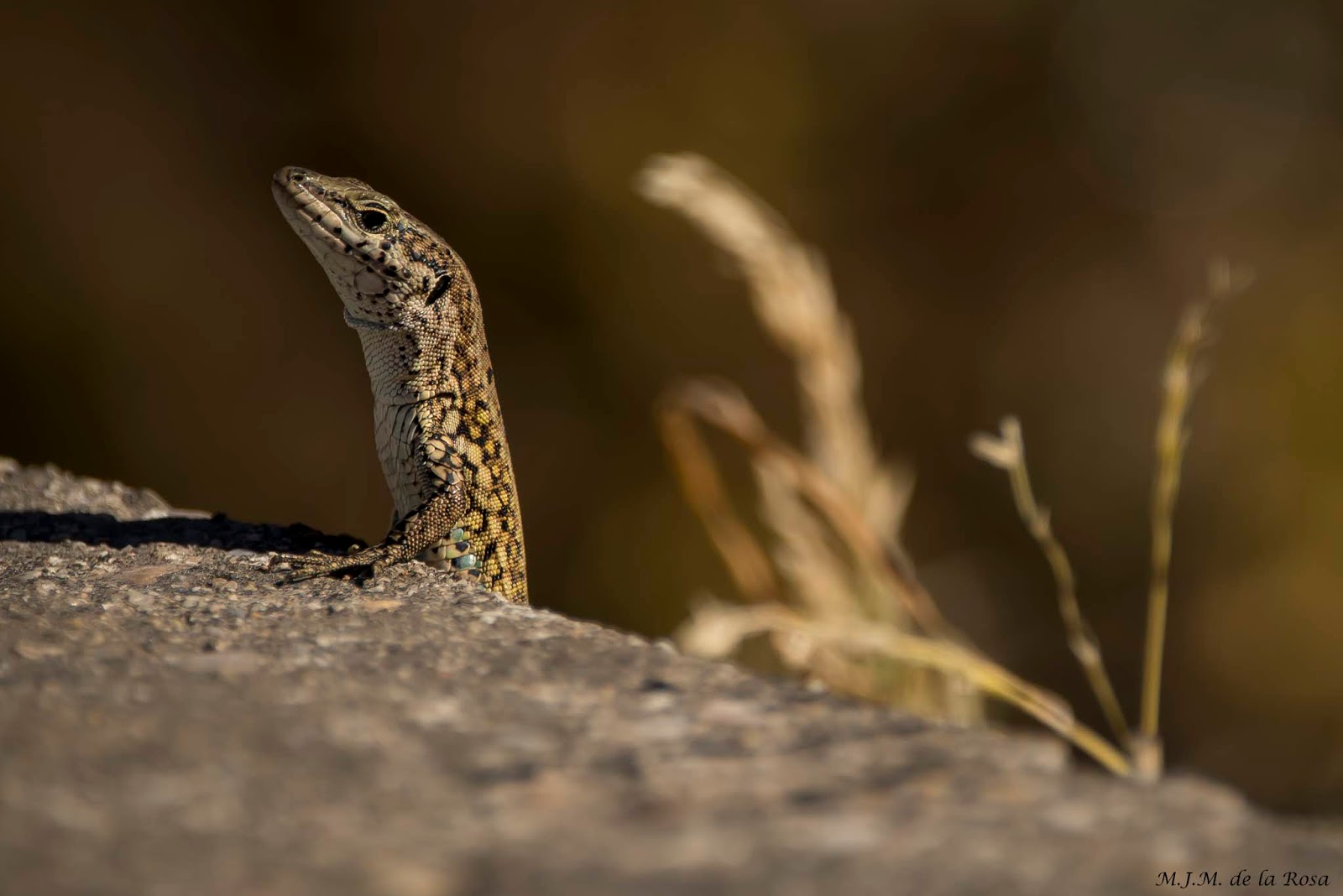
Lizard in the garden

Although the garden does not attract a wide variety of birdlife, I can consider myself lucky that I am not trapped in a flat in the city. The cooing of Collared Doves and the melodious whistle of Spotless Starlings is almost constant except when it is drowned out by the chirping of House Sparrows, which nest in a large Palm Tree. Blackbirds, a pair of Sardinian Warblers and a Chiffchaff are frequent visitors to the fruits trees and a patch of scrub with wildflowers attracts Goldfinches, Greenfinches, Serins, Crested Larks and occasionally Waxbills in the early morning.

Sardinian Wardbler

Common Waxbill

Beyond my fence the area is a popular nesting site for White Storks and they can been seen circling overhead or heard making their clattering call in the nests. Another regular visitor is the Common Kestrel, passing overhead as it searches its prey.

Common Kestrel

The skies above are also worth watching. March and April sees groups of Black Kites making their way north on migration when the weather is good and last week I saw our first Short-Toed Eagle of the year. I have also had a couple of Booted Eagles, Buzzards and Griffon Vultures, probably from the nearby mountains. Other spring arrivals include Barn Swallows (including one that has come into the living room a few times) and Common Swifts.

Black Kite

In the evening Little Egrets, Cattle Egrets, Night Herons and Jackdaws head towards Cordoba, presumably to their roosting site by the river. Last week I saw a Black-Winged Kite hovering over nearby fields just before sundown. This was a new species on the garden list, although I have previously seen it perched on lampposts or trees nearby while driving to work.

House Sparrow

While our lives have ground to a halt, nature carries on as normal. The birds I see in the garden are busy building nests or bringing food to their young and migrants are coming back from their winter ground. I hope that as the weather warms up I will start to see more arrivals from Africa. Bee-eaters should be here soon and if I am lucky I may get some warblers stopping off in the garden. Most of all the current situation has made me appreciate even more the opportunity to observe the behaviour of birds that we often overlook or take for granted, such as the  House Sparrow or Blackbird.

"Better a sparrow, living or dead, than no birdsong at all." Catullus


Saturday, 11 January 2020

Fire Hair

The warm weather at the start of the New Year gave me the chance to get out on my local patch and burn off some of the excesses of Christmas. I headed for Santa Maria de Trassierra, a small village in the Sierra Morena, about 15km from Cordoba. It is the birthplace of Beatriz Enrique de Arana, the lover of Christopher Columbus and it is thought that he stayed in the village. Today it is popular with Cordobans who have holiday homes here and as the starting point of a number of walks. 

I set off from the village towards Fuente del Elefante. This is an area I have walked many times before and despite the presence of walkers and cyclists, there is always an abundance of wildlife. Along the way I stopped to watch Blue Tits, Great Tits and Sardinian Warblers with their distinctive red eye ring. I also saw numerous Nuthatches and a Short-toed Treecreeper climbing up tree trunks in search of insects.

Sardinian Warbler

Fuente del Elefante is a large fountain in the shape of an elephant, which may date from Roman times and is part of the Valdepuentes Aqueduct, built to supply Cordoba with water. In Arab times it also brought water to the nearby Medina Azahara. The remains of the aqueduct can still be seen here, however the original elephant fountain is now housed in a museum in Cordoba and has been replaced by a replica. 

I stopped for a while near the fountain and watched Hawfinches, Chaffinches and Greenfinches in the treetops. Seeing these species together put the Hawfinch's size into perspective. Looking like a bird that has spent too much time at the gym, it is about twice the size of a Greenfinch. In Spanish it is called Picogordo which translates as big beak. This is an apt name for a birds whose bill, with a crushing force of over fifty kilograms, is able to break open acorns. Lower down in the canopy a Crested Tit hopped between the branches before being frightened off by the arrival of a Jay. In the ruins of a nearby building a Black Redstart darted between the ground and its lookout point on a wall and White Wagtails scurried across the fields. A loud 'krack krack' call marked the arrival of a pair of Ravens. 

After a while the tranquility was broken by the arrival of a group of walkers and so I headed back the way I came, taking the path towards Aroyo del Beyarano. Robins, Chaffinches, Nuthatches, Great Spotted Woodpeckers and Azure-Winged Magpies were common along this part of the track which passes through more oak forest. Then the high pitched song of Firecrest caught my attention. It was moving restlessly among the branches, but close enough to give me the chance to observe its bright green mantle and orange crest. In the sunlight its crest looked almost as if it had been sprayed on with luminous paint. In fact, the ignicapilla of its scientific name (Regulus ignicapilla) translates as “fire hair,” a reference to this blazing crown.I could also clearly see its white supercilium which its relative the Goldcrest doesn't have. However, like the Goldcrest this is a tiny bird, at just nine centimetres long and weighing just six grams. The fact that I was able to observe it for around ten minutes was the highlight of my afternoon. 

Firecrest

As I came out of the trees I could see Griffon Vultures circling as they looked for their next meal. There is a small population of about forty birds which nest nearby at Baños de Popea. The area is also home to other raptors such as Sparrowhawks and Goshawks, as well as Booted Eagles and Black Kites in the spring and summer.

Griffon Vultures

As I reached the stream (Aroyo del Beyarano) a movement on the ground caught my attention. At first I thought it was a small bird taking a mud bath, but on close inspection I realized that it was a bat which was flapping desperately in the mud. I believe they should be hibernating at this time of year so what it was doing here, I don't know. I rescued it from the mud and set it off the path to help it avoid the unwanted attention of passing dogs.


The path continues on to Baños de Popea but I decided to turn back as the afternoon drew to a close. The peacefulness of the oak forest and time spent oberving the woodland birds proved to be the perfect antidote to the New Year blues.

Saturday, 9 November 2019

Yellow-browed Warbler


This week saw a rare visitor turn up on the banks of the Guadalquivir in Cordoba. A Yellow-browed Warbler was seen in the poplar trees at Molino de Martos. It was very active, hopping from branch to branch in search of insects and occasionally being chased off by a Black Redstart. It had greenish upperparts and a distinct long pale yellow supercilium.

Yellow-browed Warbler

This leaf warbler’s breeding range extends from just west of the Ural Mountains to eastern Siberia and Mongolia. Although they normally winter in southern Asia, they are sometimes found in northern Europe in October and November. And since 2014 they have started coming to Spain in regular numbers with between 4 and 38 individuals seen each year. At first these sightings were thought to be migrants who had got lost or been blown of course but it now seems that they may in fact be part of a pioneering group which are dispersing into new areas. In fact there does appear to be a small population wintering in the Canary Islands. So it seems that this is a bird we are likely to see with increasing frequency in the years to come.

Thursday, 29 August 2019

The Flatlands

Weeks of never-ending heat in Cordoba meant I, like the birds, was in search of water. The obvious choice might have been to head for the coast but I decided to visit a wetland area in the La Mancha plain, the land of windmills in Don Quixote, called Tablas de Daimiel. The area was declared a National Park in 1973 and is one of the smallest, with an area of 1928 hectares. In 1988 it was made a Special Protection Area for Birds (ZEPA). Tablas de Daimiel is the last remaining example of floodland wetlands which were once common in central Spain. The wetlands are fed with two types of water making an unusual ecosystem: the Guadiana contributes fresh water, while its tributary the Gigüela is brackish. Underground streams also used to surface in springs known as Ojos (eyes). The area is an important stopping point to a great number of migratory birds as well as a wide range of resident species. 

My friend Ron and I left Cordoba early and stopped mid-morning at a roadside bar in the Sierra de Despeñaperos, which is located at the eastern edge of the Sierra Morena. The decision to lift the binoculars out the car proved to be a good one, as before we had even sat down for our coffee we had spotted a Spanish Imperial Eagle soaring around the mountain tops. We were also able to observe it through the telescope when it landed on a electricity pylon. It was soon followed by another and four or five Griffon Vultures. Not a bad way to start the trip!

By lunch time we had arrived at Tablas de Daimiel and wasted no time in setting off round the park. Stopping at the first pond we watched Reed Warblers darting between the reeds. A little further along we had a Great Tit, Zitting Cisticolas, Reed Buntings, Stonechats and Moorhens. Every so often a Marsh Harrier would glide over the reeds search for its prey and bee-eaters would pass overhead calling loudly.

Zitting Cisticola

There were not many birds to be seen and worryingly much of the park was dry. Boardwalks over the marshes now passed over dry land. While August is one of the driest times of the year, it was hard not to wonder if the lack of water is a result of intensive agriculture in the surrounding area which has drained the water table and natural springs.

European Pond Turtle

Our luck seemed to change as we neared the end of the track. First we caught sight of a Bearded Reedling flying over the reeds. This was one of the birds we had come to see so it was great to catch sight of it even if it was only fleeting. Next we watched a Penduline Tit in a tree beside the path and a few Kingfishers zipped past. Sand Martins were swooping over the reeds and a Little Bittern hurried into the cover of the reeds as we approached. Then we heard a strange pig-like squeal coming from the reed bed. Ron told me that this was a Water Rail and after waiting for a while we were rewarded with the sight of one darting across the water. It certainly produced a strange noise for such a small bird. 
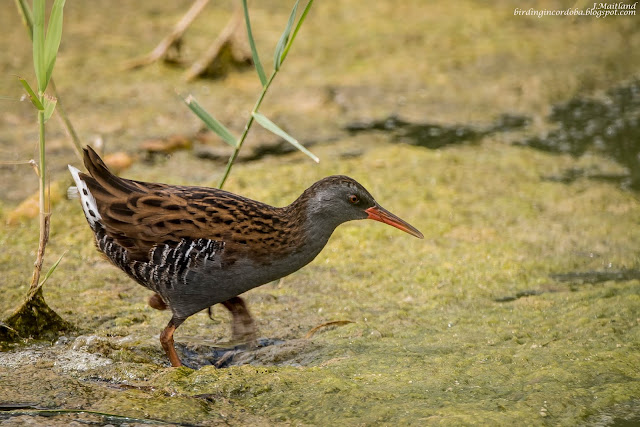
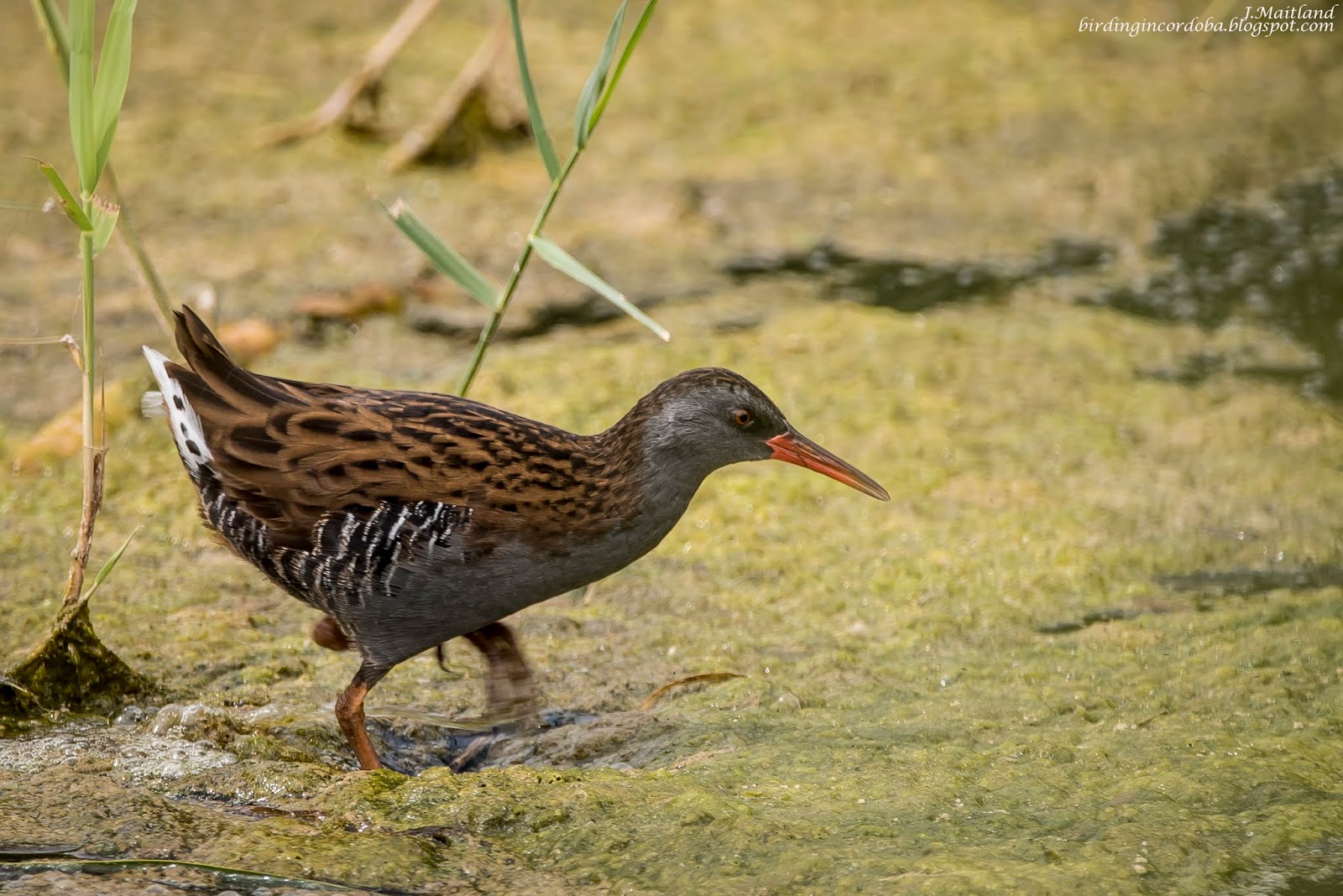
Water Rail

Rehydrating at a nearby bar we saw a flash of yellow as a Golden Oriole flew past and landed in a tree.

Golden Oriole

After our break we decided to look for sandgrouse. With no real idea of where to go we followed a track across the countryside in an area called Campo de Calatrava. It takes its name from the Order of Calatrava, a military order which held territory in the area from the time when it was on the border between Christian and Muslim Spain. We passed fields of watermelons, onions and others with grapes or olives. But what were looking for were bare muddy fields which we suspected would be more attractive to the sandgrouse. We drove for some time, our eyes starting to ache from scanning endless fields, without luck. After an hour all we had seen for our efforts was a Stone Curlew, Hoopoes, a few Crested Larks and some Magpies. Just before we reached the end of the road, Ron's bird-dar activated and he drove us up a side track. At first we saw a Griffon Vulture being mobbed by a smaller raptor and then we shouted out in unison as we saw what we were looking for - sandgrouse sitting together on the ground in the far end of a field. We had come across a group of about 30 birds and were able to observe them through the telescope despite the heat haze. They were Pin-Tailed Sandgrouse, a beautiful bird with its striking rufous breast. These birds were a lifer for me and a great way to end the day. 

Pin-Tailed Sandgrouse

On our second day we went to Laguna de Navaseca, a lagoon which never dries up due to the constant supply of water from a treatment plant. It is a great site with numerous hides offering different views of the lagoon. From the first hide we could see Flamingos, Greylag Geese, Black-Winged Stilts, Little Egrets, Little Grebes and Black-Necked Grebes. There was a large group of White-Headed Ducks in the middle of the lagoon. There are reported to be over 150 individuals here, which is a sign of the remarkable turnaround for the species since the late seventies when there were only 22 left in Spain and all of them in Laguna de Zonar in Cordoba. 

Juvenile White-Headed Duck


A little further along we had good views of some of the waders such as Little-Ringed Plover, Kentish Plover, Wood Sandpipers, a Green Sandpiper, Common Sandpipers, Curlew Sandpiper and a couple of Little Stints. Glossy Ibis arrived and there were also large numbers of Lapwings, Moorhens and Coots. 

Glossy Ibis

The second hide allowed us to get close to the water's edge. We watched a couple of Water Rails and a Purple Swamphen feeding along the edge of the reeds. Ducks were also present, with Teal, Gadwall and Red-Crested Pochard added to the list. A pair of Snipe briefly flew in and we watched a Bluethroat and Bearded Reedling come down for a drink. A Marsh Harrier would occasionally fly over the reed bed causing panic amongst the other birds. In the trees behind us we saw a Golden Oriole, Cetti's Warblers, Willow Warblers, Woodchat Shrike, Linnets, Goldfinches and Ron spotted an Olivious Warbler. 

Goldfinch


Our last stop around the lagoon saw us add Ruff, Redshank, Black-tailed Godwits, Little Bitterns, Squacco Heron and Great-Crested Grebes to our day list. We also observed Pin-Tailed Sandgrouse flying in to drink.

Great-Crested Grebe

After lunch it was time to leave the flatlands behind us and head back to Cordoba. With over 80 species and all but one of our target species found (Black-Bellied Sandgrouse remained elusive) the trip was a resounding success. It would however be interesting to return in early spring to see the area when the water levels are higher and the birds are calling more. 


Sunday, 25 August 2019

The Guadalquivir

The Guadalquivir, which stretches 650 kilometres from its source in Sierra de Cazorla to the Atlantic Ocean in Doñana,  is sometimes described as the backbone of Andalucia. Such was its importance in Roman times, the whole region was called Baetica after the Roman name for it. Today, it plays a vital role in irrigating cropland and its waters support a wide range of fauna. However, accessing the river outside the city of Cordoba can sometimes be difficult. One of the best places to do so is at El Salto reservoir near the town of Pedro Abad, which lies 35 kilometers east of Cordoba. At the hydroelectric dam the water flows slowly and the river is wide and meandering. 

The dam itself is a good place to stop and scan for activity in the reeds and along the banks. Little Egrets, Grey Herons, Moorhens, Coots and Common Waxbills are often seen feeding here and if you are lucky you might catch a glimpse of an otter. South of the dam Common Sandpipers, Cormorants and Grey Wagtails can be observed on the boulders and rocks. It is also a good place to check the skies for raptors. I have seen Marsh Harriers, Buzzards and Black Kites here. 

Black Kite

Following the road in the direction of Adamuz you can stop to enjoy the views of the river and look along the swathes of reedbeds. I have seen Purple Swamphens hiding in the canes, Kingfishers darting from their perches to catch fish and groups of Cranes passing overhead. 

Purple Swamphen

A little further along the road you come to Arroyo Tamujoso. Often this stream is all but dried up, however it is worth stopping here to explore the area on both sides of the bridge. On the northern side I watched Kingfishers fishing in the stream and Robins, Blackcaps, Long-tailed Tits in the white poplars. On one visit I was lucky enough to get a view of a Firecrest as it hopped between branches in search of insects. A Tawny Owl was also heard calling from the trees where I parked the car but unfortunately I wasn't able to see it.

Robin

There is also a large rock outcrop called Peñón del Jituero which is a popular spot for climbers. Black Redstarts have nested in holes in the rock and on one occasion I saw a Great Spotted Woodpecker raiding a nest and causing quite a commotion. 

Black Redstart


Crossing the bridge, there is a small area which can be explored on foot. Song Thrushes and Redwings can be found here in winter and I have also spotted Hawfinches, Chaffinches, Hoopoes as well as large groups of Azure-Winged Magpies. 

The whole area is also one of the best places near Cordoba to see Bonelli's Eagles which must be nesting nearby, as I have seen them on almost every visit. These large raptors are one of the most agile and are also extremely aggressive even towards other large birds of prey. 

Bonelli's Eagle

This is certainly a place which has a good range of resident birds and it is reported to be home to Eagle Owls and the elusive Water Rail, although I haven't seen them here. You are also likely to encounter passage drop-ins, such as Osprey and Spoonbills, meaning you never know what you might find. 


Sierra de Hornachuelos

Fifty kilometres west of Cordoba lies Hornacuelos National Park in the Sierra Morena. The vast unpopulated area of scrubland, Mediterranean woodland and Holm Oak woods make it a great location for seeing some of the region's more secretive fauna.

It is a large area to explore but a good starting point is the visitor centre just outside the village of Hornacuelos. There are various walks which can be done from here, some of which require permission, but the simplest is La Rabilarga trail. Despite only being about 2km long it offers the chance to see a wide range of species and follows La Rabilarga stream. In February we saw a Lesser Spotted Woodpecker, the star attraction, just metres from the visitor centre. We also saw many members of the tit family, including Blue Tits, Great Tits, Crested Tits and Long-tailed Tits.

Long-tailed Tit

The thickets along the river are also home to Blackcaps, Sardinian Warblers, Robins, Nightingales, Cetti's Warbler, Serins, Hawfinches, Goldfinches and Chaffinches. A recent trip in August also revealed that this area is popular with Golden Orioles. 

Female Blackcap

In the Cork Oaks see saw Short-Toed Treecreepers, Nuthaches, Bonelli's Warblers, Spotless Starlings, Hoopoes and Azure-Winged Magpies, which the stream is named after.  

Other areas of the park can be explored by car. While there are not many places to pull in off the road the lack of traffic makes it relatively easy to stop. The A-3151 from the village of Hornacuelos to San Calixto and beyond is a drive which offers spectacular views of the wild landscape and the chance to see some of the more secretive birds that live here as well as Red Deer, Wild Boar and butterflies. 

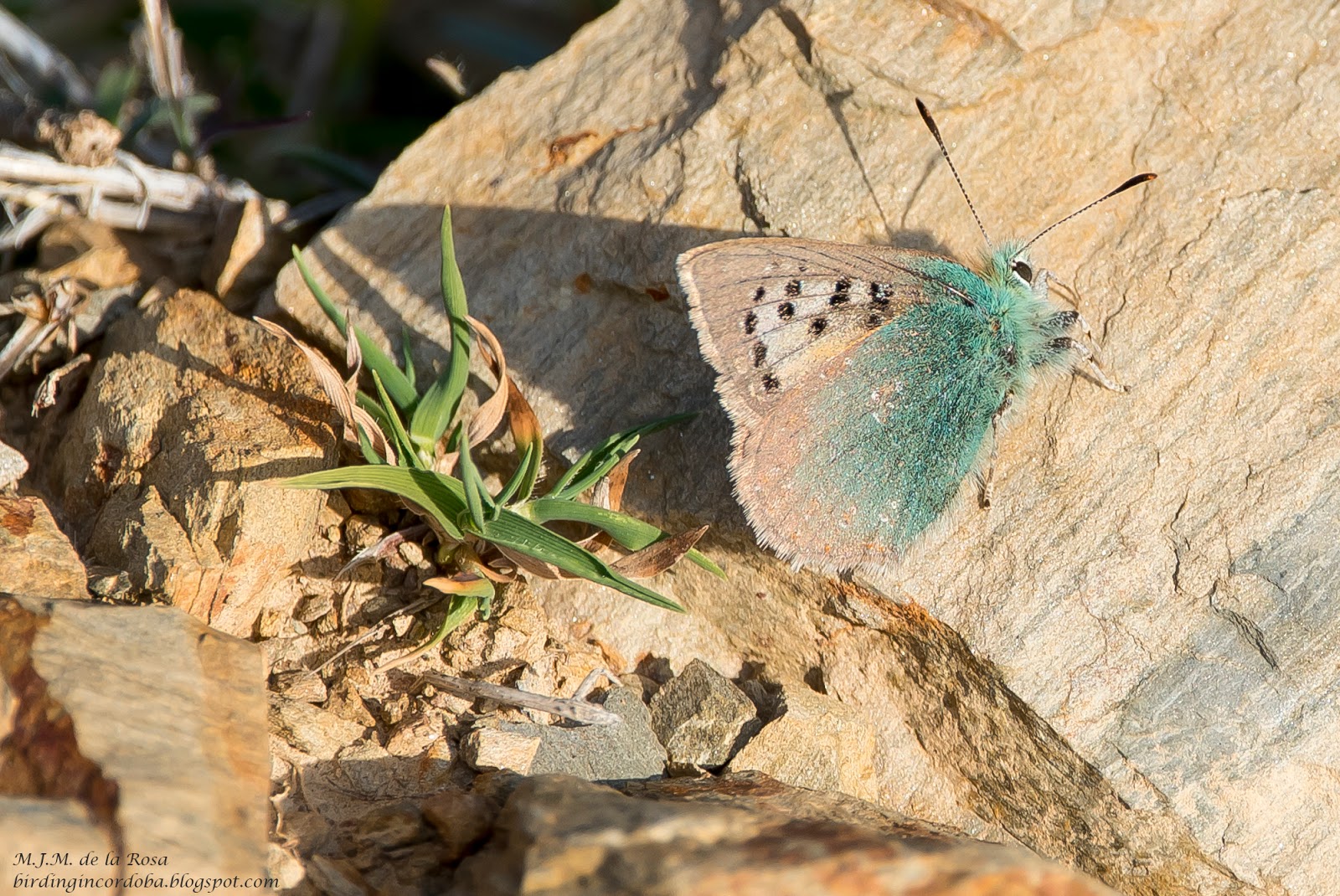
Cardenillo (Tomares ballus)

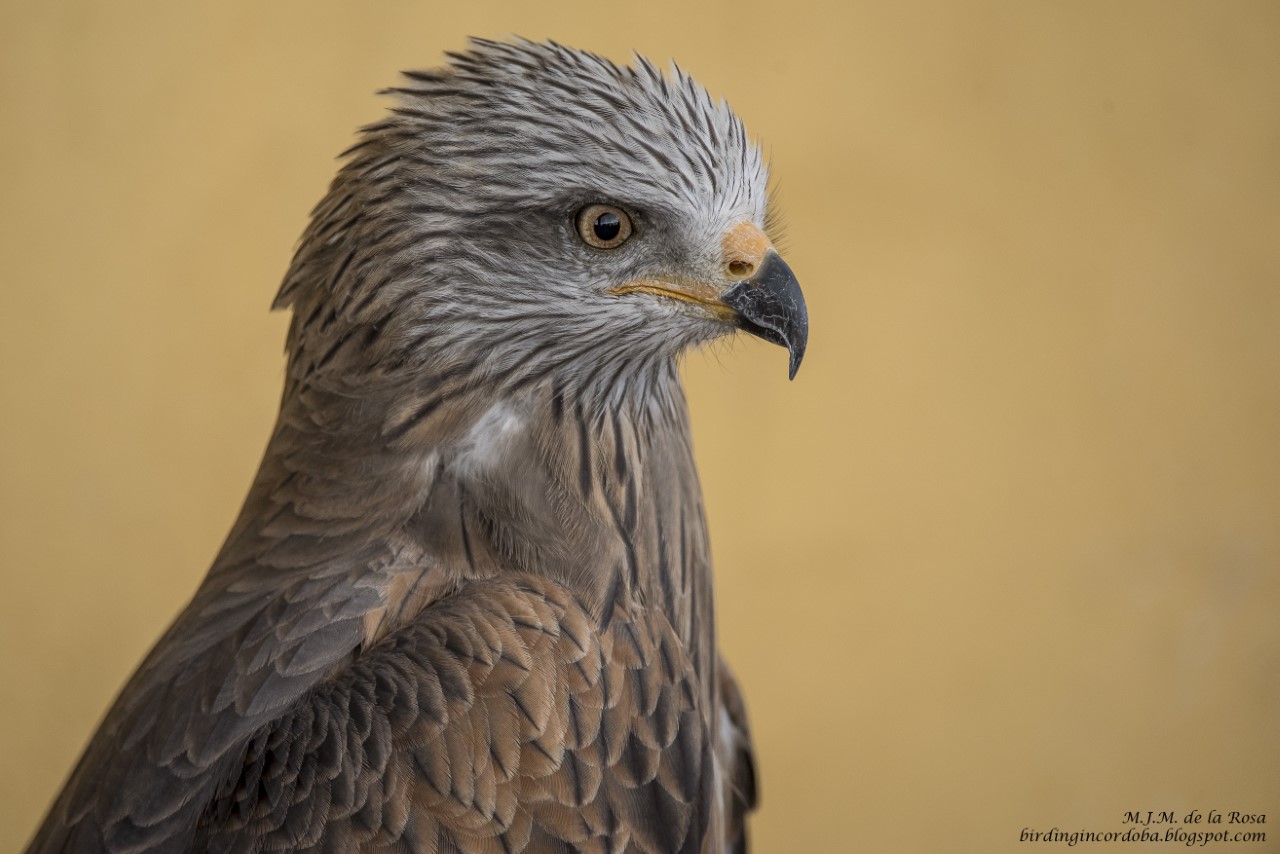
We have seen Griffon and Black Vultures soaring overhead as well as Red Kites, Booted Eagles, Buzzards and Black Storks. There is also a local population of Spanish Imperial Eagles. 

Spanish Imperial Eagle

The remoteness of the park makes it a great place for star watching and there are now regular activities throughout the year to promote this. 

The Milky Way


The area is also one of the key beekeeping regions in Andalucia and the fantastic honey can be bought in a small shop in the village. 

Bee feeding on the nectar


Autumn Getaway

In early December I had the chance to visit an area than has been on my to-do list for a while - Sierra Madrona. This mountain range is part...